What is Dynamic Search Ads? [How To Dominate Keyword Gaps in 2026]
Stop losing high-intent leads just because they don't match your exact keywords. Discover how to leverage Dynamic Search Ads to let AI aggressively vacuum the long-tail traffic you missed.
![What is Dynamic Search Ads? [How To Dominate Keyword Gaps in 2026]](https://lh3.googleusercontent.com/aida-public/AB6AXuAv9WDK6Bay6e_JxsfybMjMLLiL8BvBTYOBrziN4wqc8jDBY_Fl66LHkNt0RbcVBVrSFqutDFldGezKpuYdkG9Ho5LZDrEjhK4b734Ks6qjpIjAQ6qThHed3rgFmbqMybqiQaDhyCpK2Xf2vOzgkwl22ZHroCYW7y93-GDqPhP4n1Y38su-vOLc_eOn5yuM7py1Y9kn10wM2Mk2AgM0smnyCrvRrmGNESVbAHVynJ5-6AJOwI7Ldkd_PyNp2CikbeDY7e3TrV_Zfg)
What are Dynamic Search Ads? The Automation of Search Intent
This is for the fellow owners and agency leads who are exhausted from manually scraping thousands of keywords at 3 AM.
Are you still paying an army of junior marketers to endlessly click around Keyword Planner to harvest long-tail queries?
Cut it out! Now, let me ask you… instead of dropping a single hook in the ocean to catch one fish, why not deploy an automated, AI-driven radar net?
That is what Dynamic Search Ads (DSA) are – the ultimate funnel-plowing machine.

The Core Engine: Letting AI Read Their Minds
Let’s define it simply: You no longer feed keywords into Google. You feed it your actual Website.
Google’s crawler ruthlessly scans every corner of your pages, matches the content organically with the user’s search query, and AUTOMATICALLY generates the ad headline.
How does it differ from a Standard Search? Honestly, you basically throw your keyword list straight into the trash bin.
When does the AI step in? Google will aggressively push your DSA to the user when they type those bizarre, highly specific phrases that you could never predict.
When Is the Right Time to Use This Tech? Casting the Net Wide
Obviously, you shouldn’t cast a massive radar net in a shallow pond.
The perfect habitat? A huge e-commerce ocean boasting thousands of distinct product categories.
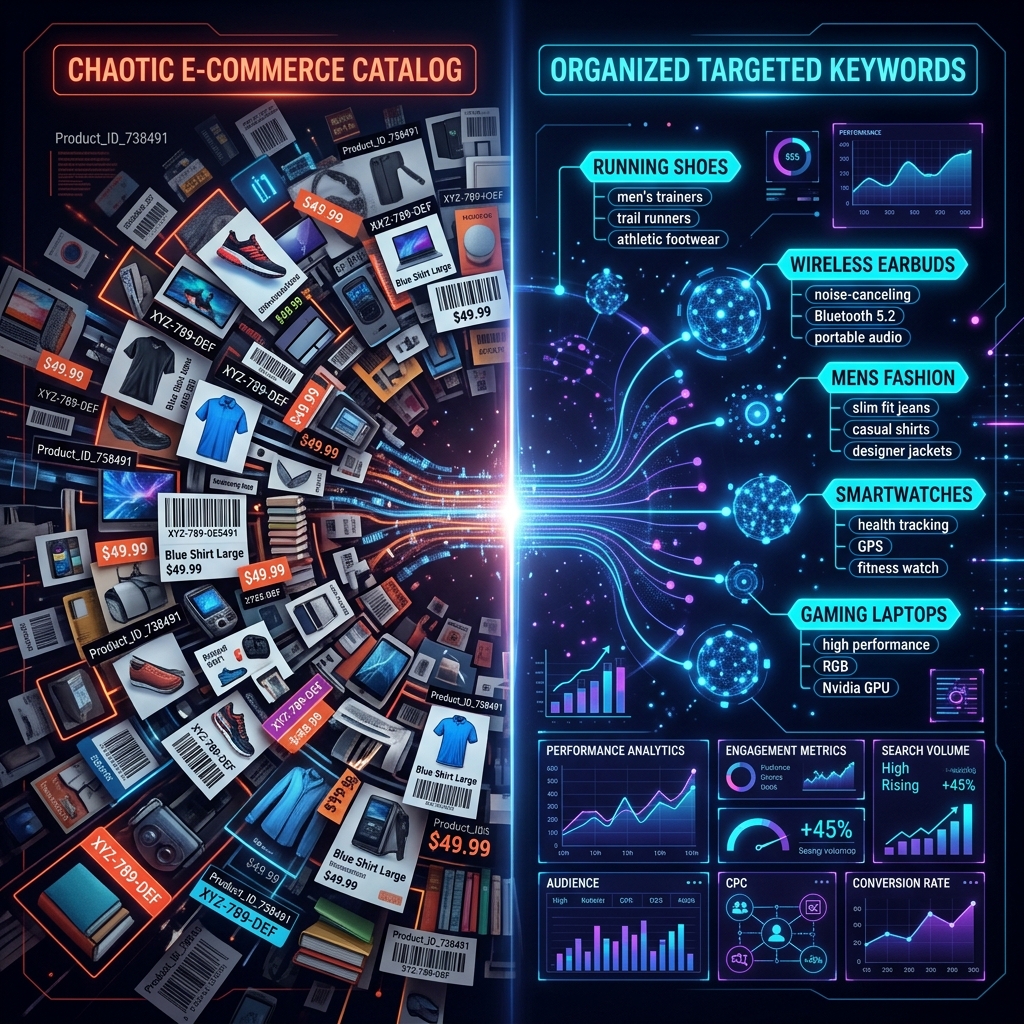
For anyone wanting to capture those ultra long-tail, low-volume queries, DSA is an absolute lifesaver.
Typically, veterans like myself run Standard Search strictly for high-volume keywords, while unleashing DSA to seamlessly plug all the remaining keyword gaps.
Major red flag: Got a brand new site, a handful of pages, poor content structure, or totally weak landing pages? Forget DSA. Google’s AI cannot salvage bad foundation!
Runviet rigorously scales DSA alongside Search across 10+ e-commerce markets. Book a totally free campaign structure audit right now.
Structuring DSA Correctly: Aiming For The Right Coral Reefs
Inside the ad account, you have to choose a target. Do you aim for the entire site (too risky), specific categories (safe play), or a precise Page Feed?
What is a Page Feed? It’s basically an Excel spreadsheet you inject directly into the AI: “Hey, I exclusively want you to crawl these URLs right here. Funnel the traffic only to these pages!”
When you set auto-targets, always focus heavily on Categories, exact URLs, or Page titles. Hit whatever converts the hardest.
A huge note: You do NOT write the headline, but the Description text is the only real estate you actually control. Polish your sales copy until it bites!
And the absolute nuclear weapon here? Negative keywords. Without it, DSA will happily burn your budget on meaningless generic queries.
Ruthless Optimization Post-Launch
Think launching the setup is enough? That level of naivety has a direct financial cost!

You must rigorously review the Search Terms Report every single week. Mercilessly assassinate junk traffic using Negative Keywords.
Filter your auto-targets critically: Is a target bleeding budget with zero sales? Pause it immediately! Is it consistently printing money? Double the bid right now.
Next, do a Landing Page Audit. Are you noticing Google funneling all the traffic to a specific page? Immediately super-optimize that exact page to maximize the conversion rate.
An unbreakable rule of mine is to absolutely separate DSA Campaigns. You never cage them in the same campaign as Standard Search.
Personalizing DSA With Dark Arts
Since Google natively hijacks your landing page’s H1 or Title tag to create the Headline, let’s step up the game with a bit of advanced sorcery.
Inject Audience Targeting. Simply layer your Remarketing lists or past Customer matches directly onto the DSA campaign.
What does this mean? It means catching the bizarre long-tail keyword while simultaneously hitting someone who visited you yesterday!
That is what RLSA + DSA looks like: Aggressively bidding premiums only on folks who already recognize your Brand identity.
Performance Max vs DSA: Which One Wins?
Recently there’s been fierce debate whether the birth of PMax is going to violently suffocate DSA.

PMax is inherently a Black Box. You throw your budget into it, close your eyes, and wait for it to cover every channel. But the trade-off is needing a massive pile of creative assets.
Meanwhile, DSA remains perfectly transparent. It gives you the Search Terms plainly, and you can easily manually steer the wheel.
Honest advice from Piblo? Run DSA heavily early on just to collect Data and map out weird keywords. Once your account is rich with conversions, hand the wheel seamlessly to the PMax black box.
Running DSA but getting drowned in junk traffic and terrible ROI? Runviet audits for free — identifying exactly where your funnel leaks.
Uncut FAQ (Frequently Asked Questions)
Do Dynamic Search Ads require any keywords?
You completely abandon the keyword list. Instead, Google's AI heavily crawls your destination page content and organically identifies the search queries for you.
Can Dynamic Search Ads function well with non-English sites?
Absolutely! The semantic understanding of AI is highly advanced today, working perfectly given that your on-page SEO structure is totally solid.
Do Dynamic Search Ads devour significantly more budget than normal Search?
It depends completely on your Negative Keyword barrier blocking junk. If structured tightly, DSA CPC is often dramatically cheaper than purchasing niche Search keys.
How do I forcibly stop Google from targeting pages I want hidden?
Simply utilize the 'Dynamic ad targets' feature and throw all those unwanted URLs directly into your exact exclusion list.

Ready to maximize your performance?
Join 50+ high-growth brands who trust Runviet with their global search strategy.